
merde
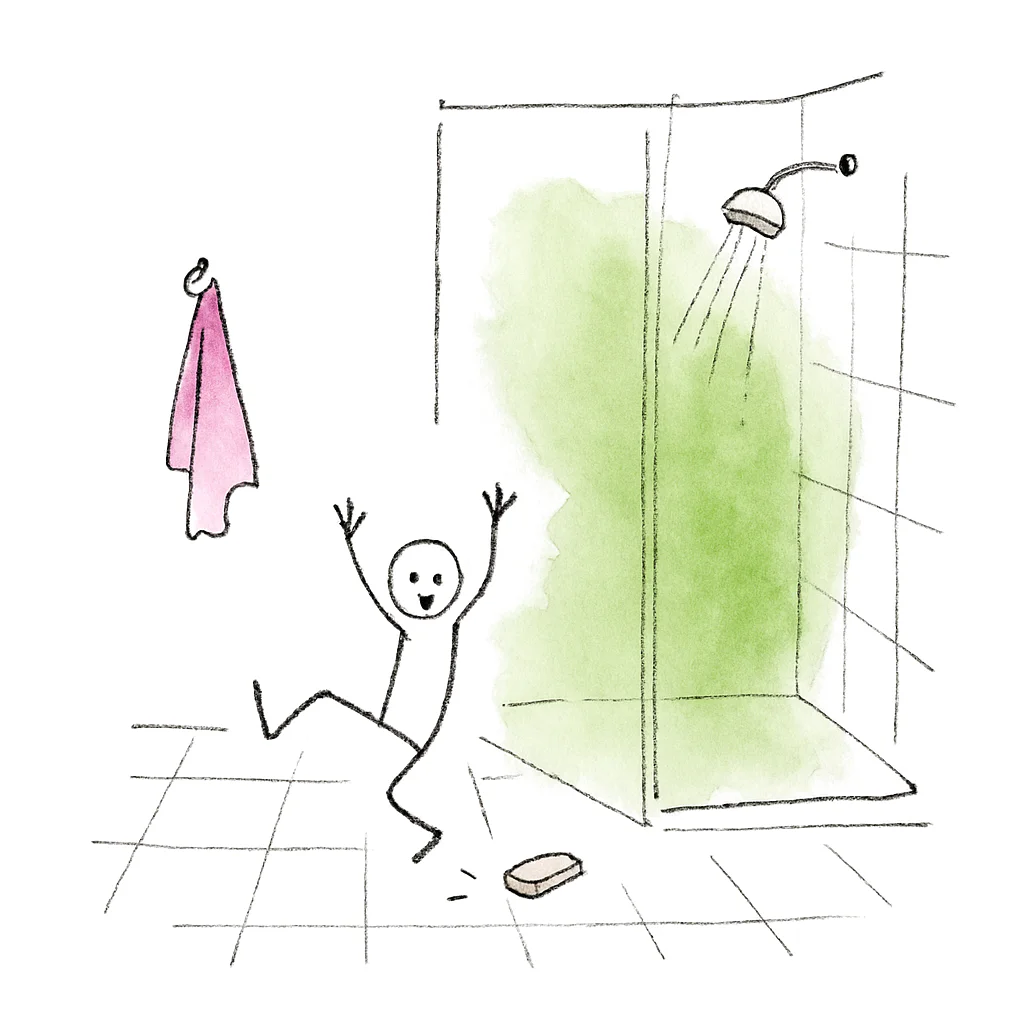
Merde literally means 'shit', and the French use it about as often as English speakers do. Oh merde ! is what slips out when you drop your phone or slide across a wet floor. Être dans la merde means being in deep trouble. It's rude, not shocking: fine with friends, less fine with your future mother-in-law.
Where you'll hear it
Chloé
Attends, je vais venir voir. Il faut peut-être que je te montre.
Wait, I'll come and see. Maybe I need to show you.
Robin
Non, ça va aller. Je vais réessayer.... [quelques minutes plus tard]
No, it's okay. I'll try again.... [a few minutes later]
Robin
Oh merde ! Je viens de glisser sur le carrelage mouillé. Je me suis fait mal au coude.
Oh shit! I just slipped on the wet tiles. I hurt my elbow.
Chloé
Fais attention ! Tu veux que je t'apporte quelque chose ?
Be careful! Do you want me to bring you something?
Listen: merde
How it shows up
Merde, j'ai oublié mes clés !
Damn, I forgot my keys!
Si je rate ce train, je suis dans la merde.
If I miss this train, I'm in deep trouble.
Demain c'est ton examen ? Merde !
Your exam is tomorrow? Break a leg!
Questions people ask
What does merde mean in English?
Shit, word for word. In practice it lands closer to damn or crap, because French people say it far more freely. You drop your keys, you say merde.
How do you pronounce merde?
One syllable: mehrd. The final e stays silent and the r sits at the back of the throat, so it never comes out as mer-day.
Why do French people say merde to wish good luck?
It's a theatre superstition: bonne chance is supposed to bring bad luck, so actors say merde before going on stage. It has spread to exams and job interviews. The polite answer is a simple merci.
Is merde a bad word in French?
It's a swear word, but a mild one. You'll hear it on TV and from your colleagues. Skip it in formal settings, and if you want the softer version, say mince.