
How French People Actually Speak: Textbook vs Real French
Reviewed against editorial standards
Bonjour ! Amélie here. 👋
If you want to understand how French people actually speak, you need both versions of the language: textbook French and real spoken French. The textbook version explains the structure. The spoken version is what reaches your ears in cafés, films, podcasts, kitchens, trains, and slightly dramatic family dinners.
The short answer: Textbook French teaches the full, careful version of the language. Real French often shortens it: je ne sais pas becomes chais pas, il y a becomes y a, tu as becomes t’as, and the negative ne often disappears. Learn both: one gives you accuracy, the other gives you comprehension.
Is textbook French wrong?
No. Textbook French is not the enemy.
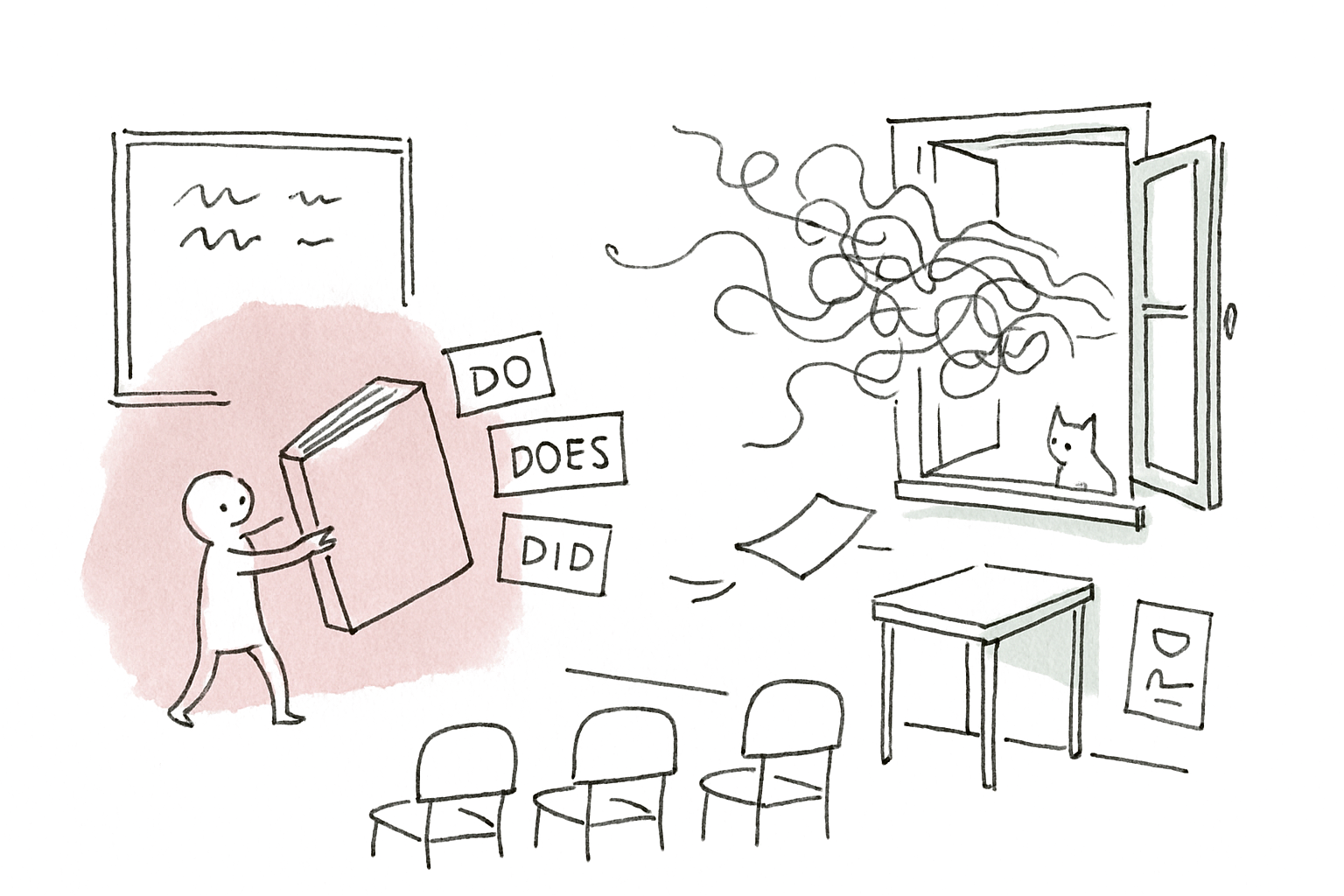
Textbook French gives you the skeleton. It teaches you complete forms, grammar, spelling, agreement, and polite registers. You need that. If you never learn je ne sais pas, then chais pas is just a mysterious noise. If you never learn il y a, then y a has nothing to attach to.
The problem is not that textbooks teach formal French. The problem is when learners only meet formal French, then feel betrayed by ordinary speech.
You need the careful version and the everyday version in the same brain. Ideally without them fighting in the hallway.
Why does real French sound so different?
Because spoken language optimises for speed, rhythm, and social ease.
In conversation, French people do not pronounce every written letter. They link words, reduce common phrases, drop the ne in many informal negatives, use on far more than nous, and put little connectors everywhere: bon, bah, en fait, du coup, tu vois. Even “honestly” gets the spoken treatment: here is how to say honestly in French without sounding like a court transcript.
None of this means people are speaking “bad French.” It means they are speaking naturally.
English does this too. “I am going to” becomes “I’m gonna.” “Did you” becomes “didja.” “I don’t know” becomes “dunno.” You probably do not think English collapsed morally because someone said “gonna.” French is the same, just with better pastries.
What do French people actually say?
Here are common differences my students need to hear early.
| Textbook French | What natives often say | What changes? |
|---|---|---|
| Je ne sais pas. | Chais pas. | The full phrase compresses. |
| Il y a un problème. | Y a un problème. | Il often disappears in speech. |
| Je ne comprends pas. | Je comprends pas. | The ne drops. |
| Nous allons partir. | On va partir. | Everyday speech prefers on. |
| Tu as raison. | T’as raison. | Tu as contracts. |
| Je suis fatiguée. | J’suis fatiguée. | Je suis reduces. |
| Qu’est-ce que tu fais ? | Tu fais quoi ? | The question becomes simpler. |
| Cela m’intéresse. | Ça m’intéresse. | Ça replaces formal cela. |
| Donc, on fait quoi ? | Du coup, on fait quoi ? | A conversational connector appears. |
This is not a slang list. Most of these are ordinary, high-frequency spoken patterns. The small sounds between them, euh, bah, bon, en fait, have their own page: French filler words. You can hear them from educated adults, colleagues, friends, shopkeepers, podcast hosts, and people complaining about the weather.
Do French people really drop the ne?
Yes, very often in informal speech.
The full negative is:
Je ne sais pas.
In everyday conversation, you will often hear:
Je sais pas.
Or even:
Chais pas.
This does not mean you should never use ne. In formal writing, careful speech, exams, and professional contexts, the full form still matters. The skill is knowing the register.
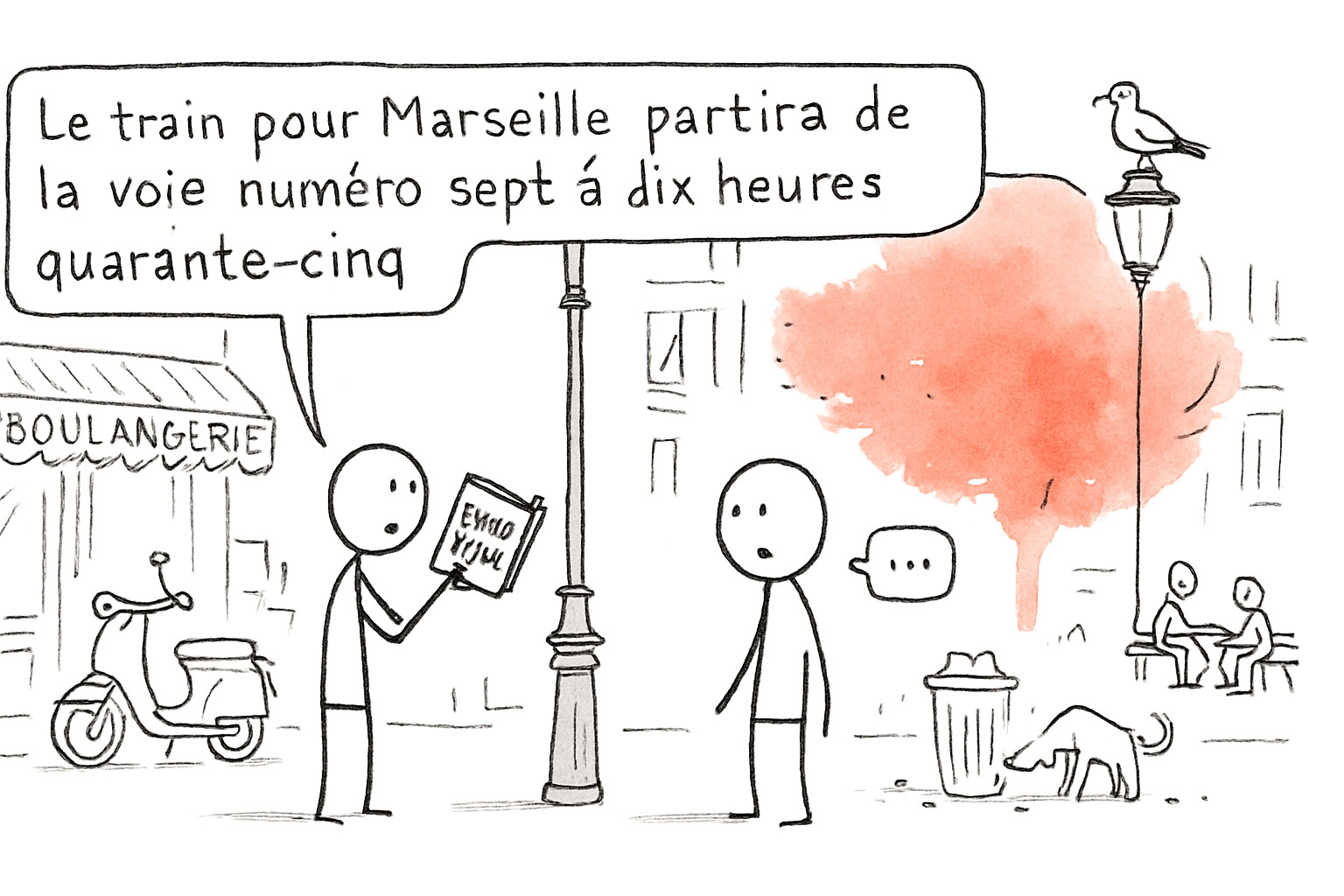
If you are speaking slowly as a learner, saying je ne sais pas is perfectly fine. If you are trying to understand native speech, you must recognise je sais pas and chais pas immediately. Comprehension comes before performance.
Should you speak like this yourself?
Eventually, yes, but gently.
I do not recommend that learners force casual reductions too early if they do not yet understand the register. There is a difference between sounding natural and copying a register you do not yet control.
Start by recognising the forms. Then use the safest ones:
- on instead of nous in conversation
- ça instead of cela
- dropping ne with people you know
- t’as and j’suis when the rhythm feels natural
Want somewhere to practise them? My French conversation questions with English translations are full of these forms: t’as, t’es, c’est quoi, tu vas où.
Save stronger slang for later. Your goal is not to become a caricature of a Parisian teenager. Your goal is to understand normal adults and sound a little less translated.
Why do apps and classes often miss this?
Because clean language is easier to teach and test.
Apps are good at short prompts, vocabulary recall, and repetition. They are less good at messy turn-taking. Textbooks are good at structure and progression. They are less good at showing what happens when a sentence is said quickly by someone who is late for the metro.
Classes can be excellent, but classroom French is often slowed, corrected, and simplified. That is kind, but it can leave learners shocked by native audio.
None of these tools are bad. They simply have limits. If your goal is spoken comprehension, you need material that includes spoken French on purpose, not as an accident.
That is why French with Amélie is built around realistic dialogues. Free readers get one new dialogue every week. Members get 2 full lessons a week, native-speed, slow, and fast audio, annotated vocab notes, exercises, writing prompts, monthly level tests, the private podcast feed, and the 220+ lesson library.
Start learning today — one real French dialogue every week →
How can you train your ear for real French?
Use a simple three-pass method.
First pass: listen without reading. Do not panic. Catch the situation, the emotion, and any obvious words.
Second pass: read the transcript while listening. Circle the places where the written form and spoken sound did not match.
Third pass: listen again without the transcript. The goal is to hear the sentence differently now that your brain knows the trick.
Do this with short dialogues. Long native podcasts are wonderful later, but they are a difficult first gym. You want repetition, clarity, and enough support that your ear improves instead of simply enduring.
Not sure whether your listening is A2, B1, or B2? Take the free 3-minute listening test and use that as your starting point.
What do learners ask me most?
Is real spoken French just slang?
No. Slang is only one part of it. Real spoken French also includes contractions, rhythm, dropped sounds, informal grammar choices, fillers, and everyday connectors.
Will I sound rude if I drop the ne?
In casual conversation, usually no. In formal writing or careful professional speech, keep the full negative. Register matters more than one universal rule.
Should I learn textbook French or real French first?
Learn the textbook form first enough to understand the structure, then quickly connect it to the spoken form. If the two stay separate for too long, listening becomes much harder than it needs to be.
Bonne écoute — real French is not a different language. It is the same language wearing comfortable shoes. 💜

About Amélie Laurent
What is French with Amélie?
Finally understand real spoken French, with a teacher in it with you.
- 💬 2 Full Lessons a week, with Amélie's annotated vocab notes
- Every dialogue at native speed, 🐢 Slow Audio and ⚡ À la parisienne
- 💜 The Private Podcast: 220 episodes with Live Transcript, in your podcast app
- 📚 The 220-Lesson Library, with member-only series like Hot Issues 🔥 and Vivre en France 🥖
- ✅ Monthly Level Tests that track your climb
- A real teacher: Amélie writes every dialogue herself
Expressions mentioned in this guide
In this cluster
- Start here: Why Can't I Understand Spoken French? A Teacher Explains
- French Listening Practice: 20-Minute Method
- Chais Pas Meaning: Why French People Say It
- French Plateau: Why Intermediate Learners Stall
- How Long from B1 to B2 French? The Honest Answer
- French Filler Words: The 14 Sounds You Hear in Every Conversation
- Why Do French People Talk So Fast? What Your Ear Is Actually Missing
- How to Understand French Movies Without Subtitles: A Teacher's 4-Step Method