
Why Can't I Understand Spoken French? A Teacher Explains
Reviewed against editorial standards
Bonjour ! Amélie here. 👋
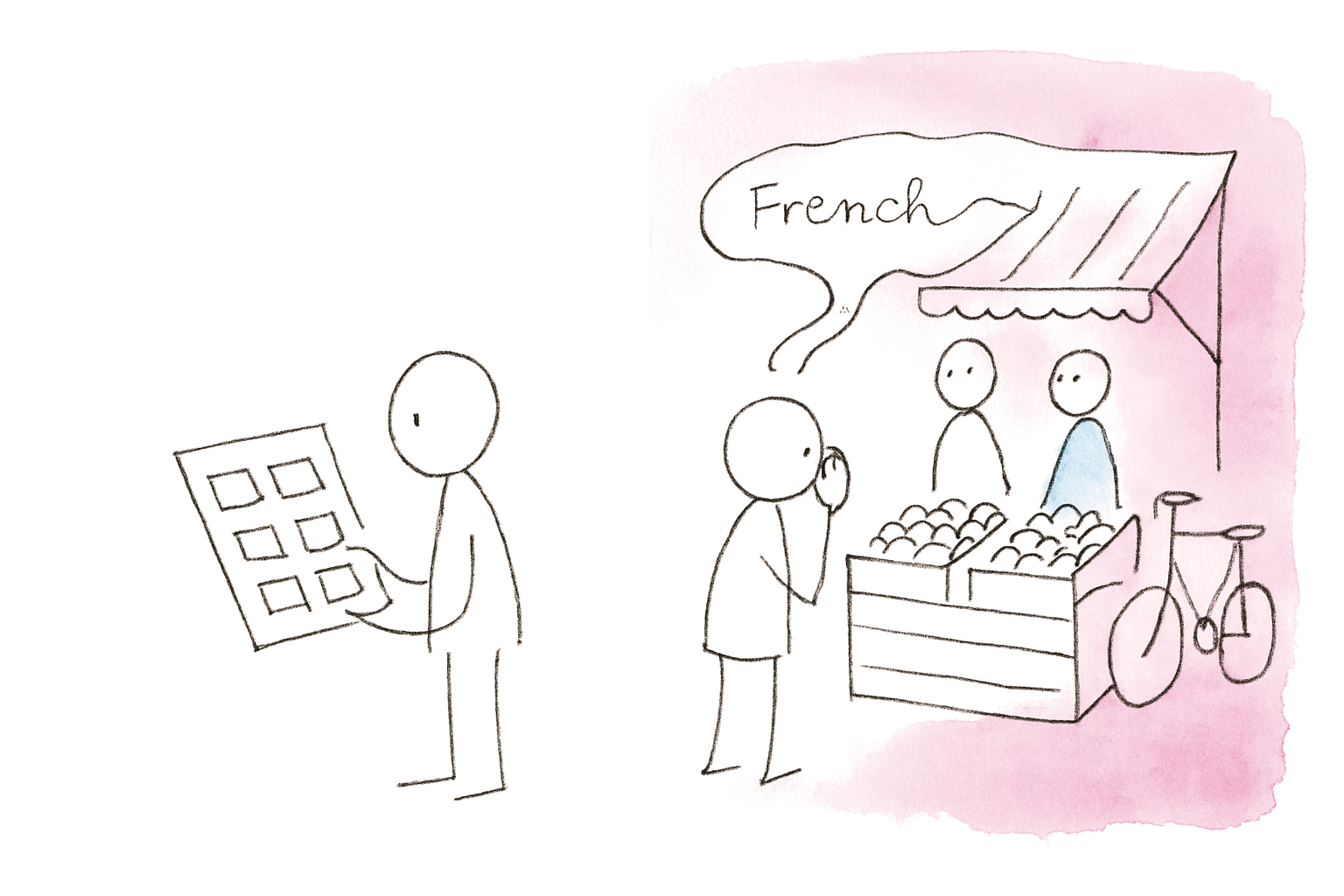
If you are asking why can’t I understand spoken French when you can read it reasonably well, you are describing one of the most common intermediate problems I see. You are not “bad at French.” You have probably trained your eyes much more than your ears.
The short answer: You can read French but cannot understand it spoken because written French shows boundaries that speech hides. Native speakers link words, drop sounds, reduce common phrases, and use fillers constantly. Your brain knows the textbook version, but your ear has not yet learned the real spoken shape.
Why can you read French but not understand it spoken?
Because written French is generous. Spoken French is economical.
When you read, every word politely stands apart. Je ne sais pas is four visible pieces. Il y a is three. You can pause, reread, and let your grammar knowledge do its little office job.
When someone says the same idea at normal speed, the shape changes. Je ne sais pas often becomes chais pas. Il y a often becomes y a. Je suis may become j’suis. Tu as becomes t’as. The little negative ne often disappears in everyday speech.
The version you learned to recognise on paper is not always the version your ear receives.
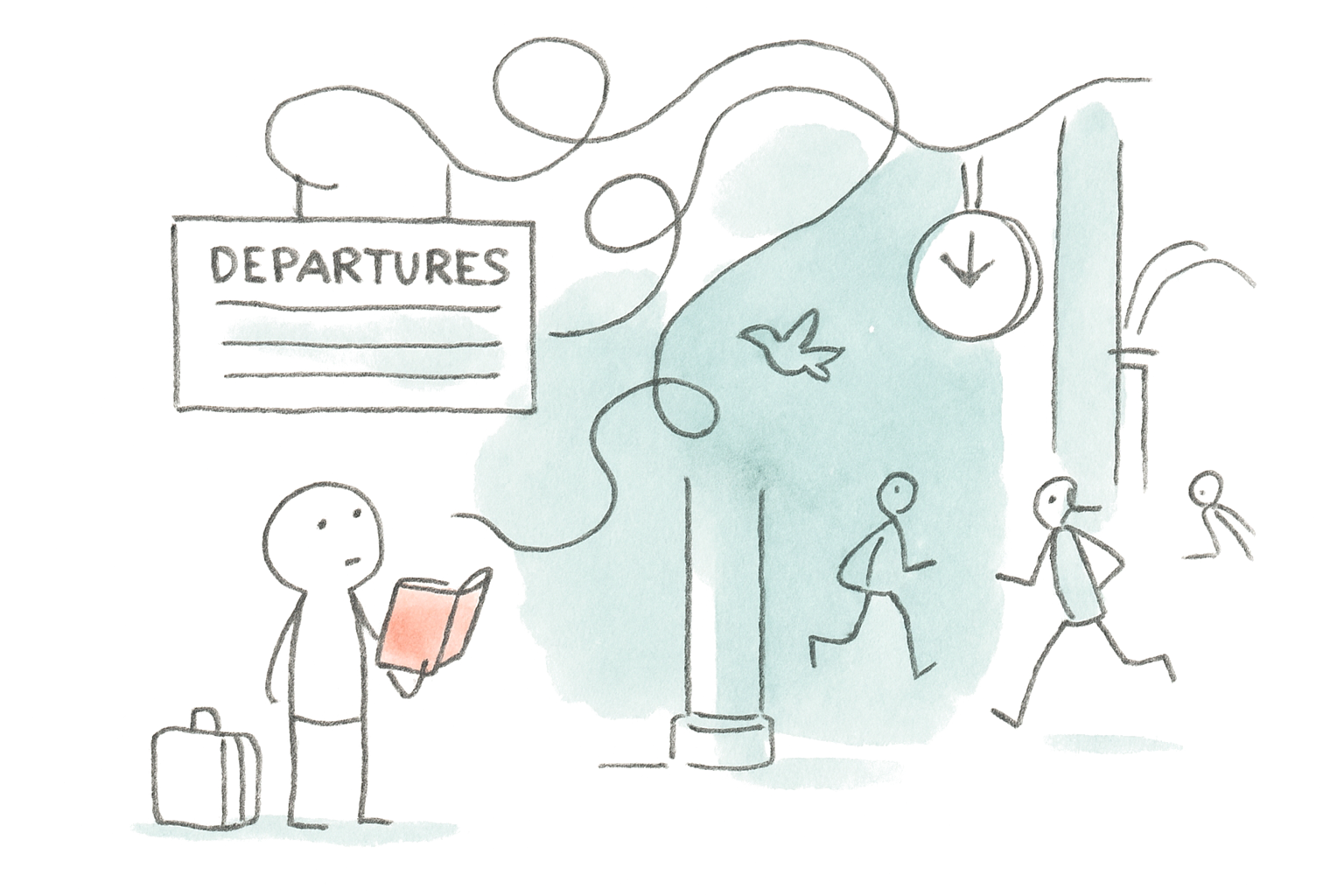
Why does French sound like one long word?
Because French rhythm is not English rhythm.
English tends to stress certain words strongly. French is more syllable-timed and smoother across a phrase. Add liaison, elision, and everyday reductions, and the gaps between words become much less obvious to an English-speaking ear.
That is why learners say, very accurately: “It sounds like one long word.”
Imagine you learned this:
Je ne sais pas ce qu’il y a.
Then a French person says something closer to:
Chais pas c’qu’y a.
On paper, you would understand the sentence. In the air, it arrives as a compact little sound-shape. If you have never trained that sound-shape, your brain cannot match it quickly enough. By the time you recover, the speaker is three sentences later, probably saying du coup and moving on with their life. Très normal. Very annoying. Both can be true.
Are French people really swallowing half the letters?
Not exactly, but I understand why it feels that way.
French spelling preserves many letters that are not pronounced in everyday speech. Final consonants are often silent, the e in small words may weaken, and common phrases compress because people use them all day.
Textbooks usually teach the full form first because you need it. Formal French matters. You should know that je ne sais pas is the complete structure. You should know how negation works. You should know that il y a means “there is” or “there are.”
But if nobody trains you on the spoken forms, you end up with a strange gap: you know the language, but only when it behaves itself.
And real French does not always behave itself. Frankly, neither do French people. ☕️
Why do you understand your teacher but not native speakers?
Because your teacher is probably helping you more than you realise.
Good teachers slow down slightly. They choose vocabulary they know you know. They repeat. They avoid interrupting themselves. They make the conversation pedagogically fair.
Native speakers at a dinner table are not doing that. They are thinking about the story, the joke, the metro strike, the price of cheese, the person interrupting them, and whether they remembered to buy bread. They are not monitoring whether your B1 listening comprehension is emotionally prepared.
This is why “I understand my teacher but not real French people” is not a contradiction. It is evidence that you are ready for the next type of input.
What should your ear learn first?
Start with high-frequency spoken French, not rare vocabulary.
These are the little forms that change everything:
| Textbook French | What you may hear | Why it matters |
|---|---|---|
| je ne sais pas | chais pas | A very common reduction |
| il y a | y a | Everywhere in conversation |
| tu as | t’as | Fast everyday speech |
| je suis | j’suis | Very common self-description |
| nous allons | on va | Spoken French prefers on |
| donc / alors | du coup | A favourite connector/filler |
You do not need to memorise slang lists with 200 words you will never use. You need the small spoken patterns that appear constantly.
That is the 20% of French that helps you understand 80% of conversations.
How should you train spoken French without starting over?
Please do not start over. You have already done useful work.
Instead, change the method:
- Listen before reading.
- Read the transcript and identify what you missed.
- Mark the difference between the written form and the spoken form.
- Replay the exact sentence until it stops sounding mysterious.
- Reuse the phrase out loud once, even softly.
This is why I build French with Amélie around realistic dialogues. Free readers get one new dialogue every week. Members get 2 full lessons a week, native-speed audio, slow audio, fast audio, annotated notes, exercises, writing prompts, monthly level tests, the private podcast feed, and the 220+ lesson library.
The point is not to drown you in French. It is to give your ear repeated contact with real speech, plus enough support that you can actually understand what happened.
Start learning today — one real French dialogue every week →
When should you measure your listening level?
Before you make a new study plan.
The intermediate plateau feels vague because learners measure it vaguely: “I can read articles, but films are impossible.” That is useful emotionally, but not useful operationally.
Use a listening-based check instead. Take the free 3-minute listening test, note the result, then train consistently for six to eight weeks and retake it. If you can identify more words without the transcript, recover faster after missed phrases, and understand the general meaning at native speed, you are improving.
Progress in listening often arrives quietly. One day the sentence that used to be fog has edges. 💜
What do learners ask me most?
Why can I understand French when I read it but not when people speak?
Because reading gives you visible word boundaries and time. Speech removes both. You need targeted listening practice with transcripts and spoken-form notes.
Do French people really talk too fast?
Sometimes, yes, but speed is not the whole problem. The bigger issue is compression: linked words, dropped sounds, contractions, and familiar phrases that do not sound like their written form.
Should I watch French movies without subtitles?
Not at first. Use French subtitles, short clips, and transcripts. Your goal is ear-eye matching, not heroic suffering in front of a two-hour film.
Bon courage — if it sounds like one long word today, that simply tells us what to train next. 🥖

About Amélie Laurent
What is French with Amélie?
Finally understand real spoken French, with a teacher in it with you.
- 💬 2 Full Lessons a week, with Amélie's annotated vocab notes
- Every dialogue at native speed, 🐢 Slow Audio and ⚡ À la parisienne
- 💜 The Private Podcast: 220 episodes with Live Transcript, in your podcast app
- 📚 The 220-Lesson Library, with member-only series like Hot Issues 🔥 and Vivre en France 🥖
- ✅ Monthly Level Tests that track your climb
- A real teacher: Amélie writes every dialogue herself
Expressions mentioned in this guide
In this cluster
- French Listening Practice: 20-Minute Method
- How French People Actually Speak: Textbook vs Real French
- Chais Pas Meaning: Why French People Say It
- French Plateau: Why Intermediate Learners Stall
- How Long from B1 to B2 French? The Honest Answer
- French Filler Words: The 14 Sounds You Hear in Every Conversation
- Why Do French People Talk So Fast? What Your Ear Is Actually Missing