
InnerFrench Review: Best Bridge, Clear Limits
Reviewed against editorial standards
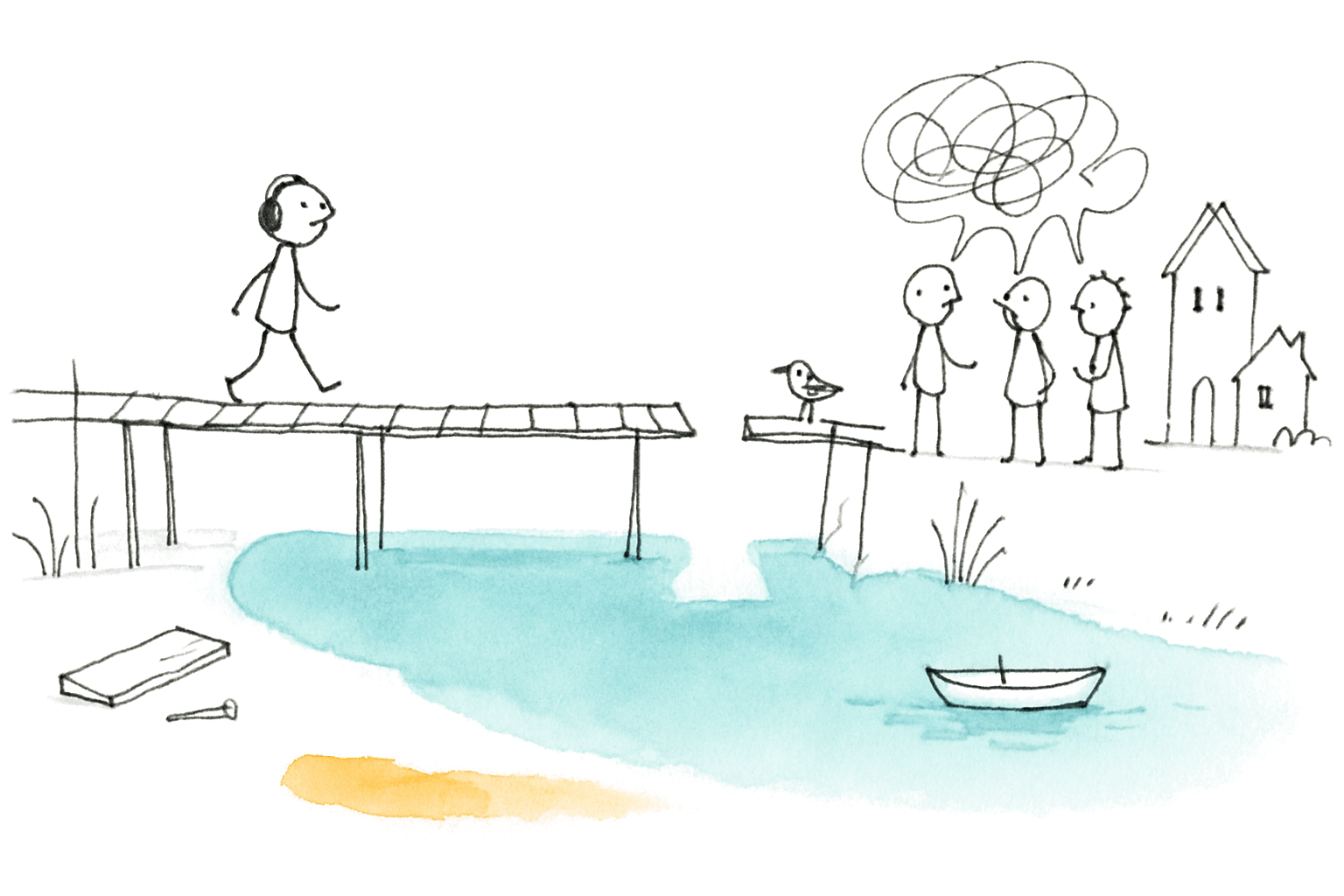
Bonjour ! Amélie here. 👋
If you are looking for an InnerFrench review, you are probably in a very specific place: you understand some French, you do not want baby sentences anymore, and you are wondering whether Hugo’s podcast can carry you from “I studied French” to “I can follow French people.”
My honest answer is: InnerFrench is one of the best bridges in the French-learning world. It deserves its reputation. It is clear, thoughtful, generous, and unusually good at making intermediate learners feel intelligent again. But it is still a bridge, not the whole country.
The short answer: InnerFrench is excellent for intermediate French learners who need clear, interesting monologues with transcripts. Its limit is not quality. Its limit is format: one careful voice, controlled speech, and very little unscripted everyday dialogue at native speed. Use it, enjoy it, then add messier French.
Update, October 2026: the podcast ended on 14 September 2026 with episode 200 (co-hosted with Ingrid since episode 92). The archive and transcripts stay up, so everything below still applies; “what comes after InnerFrench” is now the whole question, and the next steps are in the last section.
Is InnerFrench good for intermediate French?
Yes. Very good.
The InnerFrench podcast works because it respects the intermediate learner. It does not treat you like a tourist trying to order coffee for the first time. It gives you real topics: culture, society, habits, psychology, travel, ideas. The French is accessible, but not childish.
That combination matters. Many learners quit listening practice because beginner audio is boring and native audio is brutal. InnerFrench sits in the humane middle: interesting enough to continue, clear enough not to collapse after thirty seconds.
Hugo also has a calm teacher rhythm. He repeats ideas without sounding mechanical. He explains without smothering you in grammar. He speaks French, but he makes the road visible. For a learner around B1 or B2, that can be exactly what the ear needs.
What does InnerFrench do especially well?
First, it builds listening confidence.
Confidence is not a fluffy bonus. If every native podcast feels like a locked door, you begin to believe the problem is you. InnerFrench gives many learners their first experience of understanding extended French without subtitles. That is powerful.
Second, it keeps context high. You are not hearing random sentences. You are following a line of thought. That helps your brain predict what may come next, which is part of real listening.
Third, the transcripts make the work practical. A transcript turns “I understood nothing” into “Ah, I missed this sound, this verb, this little connector.” That is the difference between discouragement and training. I compare InnerFrench transcripts and other French podcasts with transcripts in a separate guide.
And fourth, the tone is adult. This may sound small, but it is not. Adult learners do not want to spend every evening with cartoons, quiz jingles, and sample sentences about elephants wearing hats. InnerFrench feels like something you can listen to without losing your dignity. Merci, honestly.
Who is InnerFrench best for?
InnerFrench is best for learners who already have basic grammar and vocabulary, but need more listening volume in comprehensible French.
It is especially useful if you can read an article slowly, understand your teacher, and follow learner audio when the speaker is clear. If you are at that stage, InnerFrench can help you stretch from short classroom listening to longer, more natural French.
It is less ideal if you are a complete beginner. You may enjoy the sound, but you will probably need more scaffolding.
It is also less ideal if your main problem is already this: “I understand Hugo, but I still cannot understand two French friends chatting.” That is not a failure of InnerFrench. It means you have reached the edge of what this format trains.
What level is InnerFrench?
Intermediate, which in practice means B1 to B2. Hugo speaks slowly and clearly, chooses everyday vocabulary and explains the rare word he cannot avoid, so a solid A2 learner can follow with the transcript open. The podcast describes itself as made for intermediate learners, and third-party guides agree (checked 7 October 2026; the innerfrench.com pages themselves could not be loaded from here, so the site’s own wording is not quoted).
If you are below that, keep InnerFrench as a goal rather than a daily habit. If you are above it, the clear single voice is still pleasant, but it will not stretch you.
Is InnerFrench free?
The podcast is free on every podcast app. Transcripts are free too, behind a free account on innerfrench.com (checked 7 October 2026 via third-party listings, not the site itself). The paid part is the courses, which are separate and discussed below. There is no premium tier of the podcast, and the September 2026 final episode announcement did not change that.
What gap does InnerFrench leave?
The honest gap is everyday dialogue.
Most InnerFrench episodes are one clear speaker explaining one topic. That is a beautiful format for comprehension, but real French conversation is rarely one tidy voice taking your hand through an idea.
Real French is interruptions. False starts. Tiny words. Overlap. Someone says bah. Someone drops the ne. Someone says du coup twice before deciding what they actually mean. Je ne sais pas becomes chais pas. Il y a becomes y a. The sentence you know on paper arrives wearing a smaller coat.
That is the next listening problem after InnerFrench: not “harder French” in the intellectual sense, but less polished French in the social sense.
You need to hear people negotiating meaning in real time. You need native speed, but with a safety net: transcript, notes, and a teacher pointing at the exact place where the sound changed.
Is InnerFrench enough to become fluent?
No single podcast is enough to become fluent. This is not an insult. It is just how languages work.
InnerFrench can make you much better at understanding clear intermediate French. It can give you vocabulary, cultural context, and listening stamina. But fluency also needs conversation, output, register, speed, and the ability to recover when you miss something.
If your goal is conversation, eventually you need at least three kinds of input:
- Clear intermediate input, where you understand most of it.
- Realistic dialogue, where people speak to each other naturally.
- Native material, where nobody is arranging the furniture for learners.
InnerFrench is excellent in the first category and a useful doorway into the third. The second category is where many learners are undertrained.
What should you listen to after InnerFrench?
If InnerFrench still feels challenging, stay there. There is no prize for leaving too early. Re-listen, use the transcripts, summarize episodes out loud, and make the input active.
If InnerFrench feels comfortable, add dialogue. For specific next steps, read what to listen to after InnerFrench.
Start short. Two or three minutes of real conversational French can teach your ear more than forty minutes of heroic fog. Listen once without reading. Then read the transcript. Then listen again and mark the bits your ear missed.
This is exactly why I build French with Amélie around realistic spoken dialogues. Free subscribers get a new dialogue every week. Premium adds 2 full lessons a week, the private podcast, and the 220-lesson library.
The point is not to replace InnerFrench. The point is to add the missing gym equipment: unscripted-feeling everyday dialogue, native rhythm, spoken contractions, and enough explanation that you do not drown.
Should you pay for InnerFrench courses?
Maybe, if you like Hugo’s teaching style and want a structured path from the same voice. That is the most sensible reason to pay for any course: you trust the teacher, you like the method, and you will actually use it.
I would not buy any course because you feel guilty, lost, or panicked. First, ask what problem you are trying to solve.
If the problem is “I need clearer intermediate explanations and structure,” InnerFrench may be a good fit.
If the problem is “I can follow clear monologues, but real people still sound too fast,” choose something dialogue-heavy as your next layer.
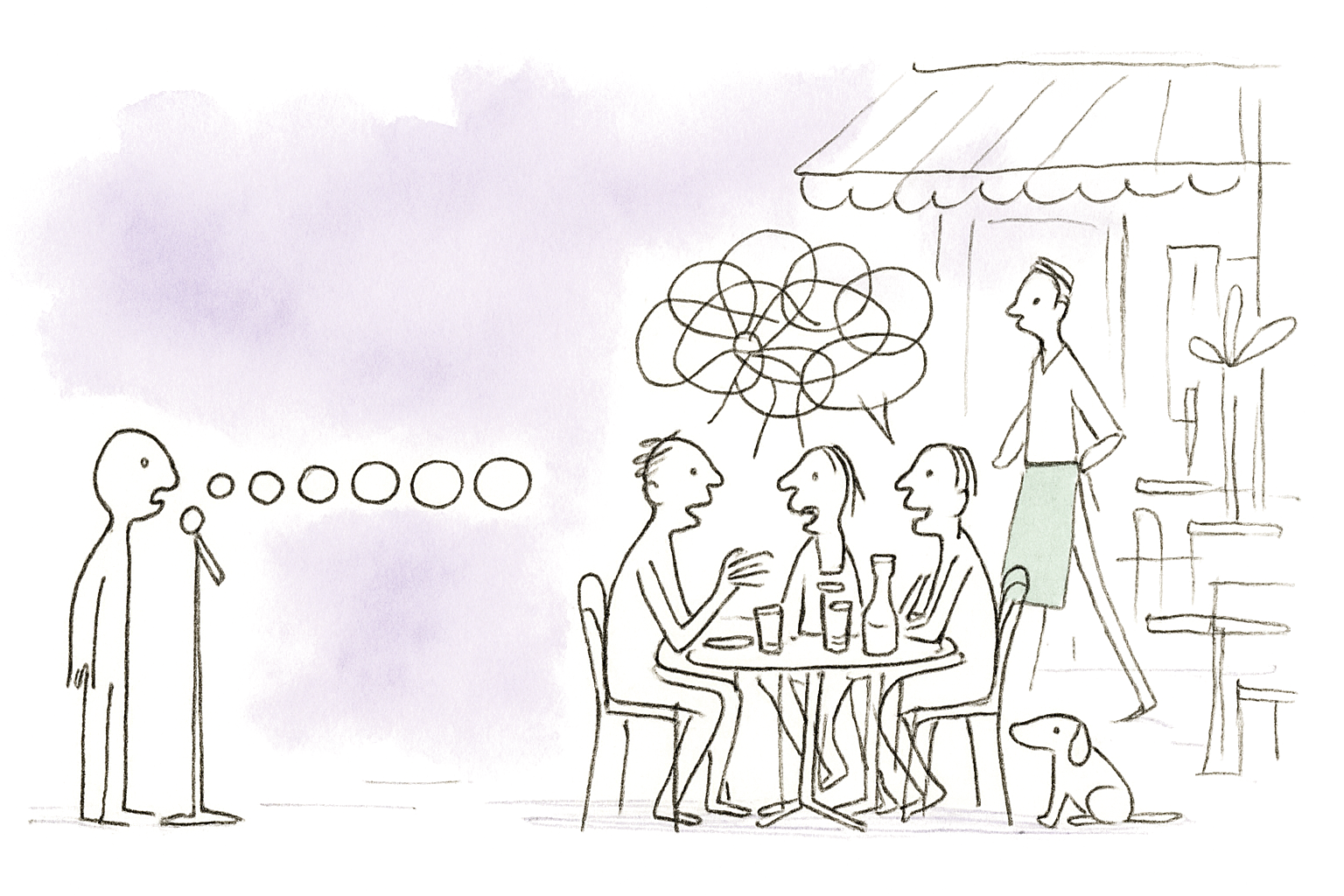
What is my final InnerFrench review?
InnerFrench is a keeper. I recommend it often, especially to learners who are tired of beginner material but not ready for full native chaos.
My only warning is this: do not confuse comfort with completion. Understanding one excellent teacher is a stage, not the finish line.
When Hugo starts to feel easy, celebrate. Then go find French that interrupts itself.
To keep training with real spoken French, start learning today for a new dialogue every week. And before you choose your next resource, take the free listening test so you know what your ear actually needs next.
Bon courage, and chapeau to any resource that gets learners this far. The next step is simply a little messier. 💜

About Amélie Laurent
What is French with Amélie?
Finally understand real spoken French, with a teacher in it with you.
- 💬 2 Full Lessons a week, with Amélie's annotated vocab notes
- Every dialogue at native speed, 🐢 Slow Audio and ⚡ À la parisienne
- 💜 The Private Podcast: 220 episodes with Live Transcript, in your podcast app
- 📚 The 220-Lesson Library, with member-only series like Hot Issues 🔥 and Vivre en France 🥖
- ✅ Monthly Level Tests that track your climb
- A real teacher: Amélie writes every dialogue herself
Expressions mentioned in this guide
In this cluster
- Start here: Best French Podcasts by Level: A2 to B2+
- French Podcasts with Transcripts: Honest List
- What to Listen to After InnerFrench: 7 Next Steps
- News in Slow French Alternatives (2026): A French Teacher's Guide
- Lingopie Review: Is It Worth It for French?
- FrenchPod101 Review (2026): Huge Library, Tradeoffs
- Free French Dialogues with Transcripts: 15 Real Lessons
- FrenchPod101 vs InnerFrench vs News in Slow French (2026)
- News in Slow French Review (2026): Price, Levels, Free?