
ça marche
Ça marche is the casual French way to say okay when someone suggests a plan. It literally means 'that works', and you'll hear it in cafés, in shops and in every group chat. Use it to accept, confirm or close a deal. D'accord is a touch more formal; ça marche sounds like you're already grabbing your coat.
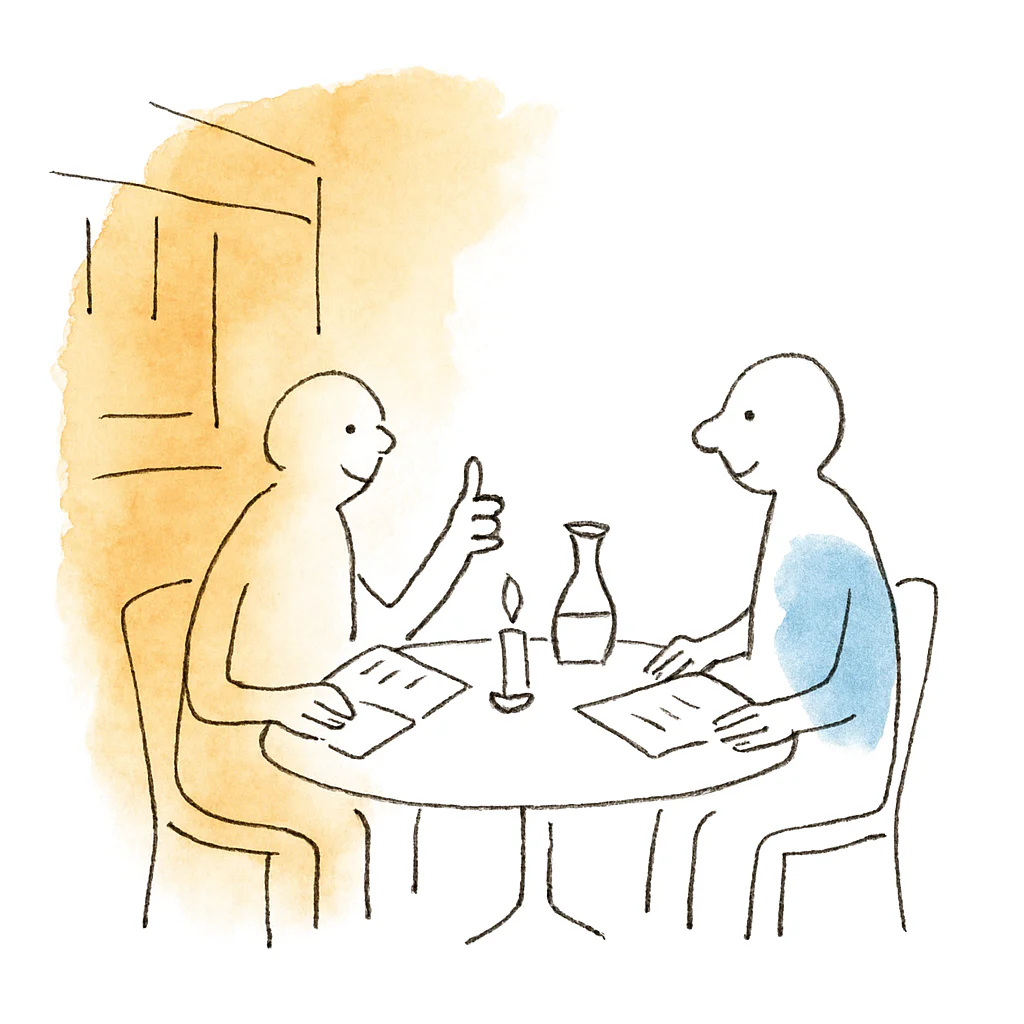
Where you'll hear it
Léa
Oh oui, ça serait super ! Mais préviens-moi que je puisse organiser mon emploi du temps.
Oh yes, that would be great! But let me know so I can organise my schedule.
Tom
D'accord, pas de problème. Il faudra que tu me rappelles d'aller au "Petit Canard" aussi. Ça fait tellement longtemps !
OK, no problem. You'll have to remind me to go to Le Petit Canard too. It's been so long!
Léa
Ça marche ! On va se régaler, j'en suis sûre.
Works for me! We're in for a treat, I'm sure.
Listen: ça marche
How it shows up
On se retrouve à 20 h devant le cinéma ? Ça marche !
Meet at 8 in front of the cinema? Works for me!
Un café et un croissant, s'il vous plaît. Ça marche, je vous apporte ça.
A coffee and a croissant, please. Sure thing, I'll bring that over.
Je t'envoie l'adresse ce soir. Ça marche, merci !
I'll send you the address tonight. Okay, thanks!
Questions people ask
What does ça marche mean in English?
Okay, deal, sounds good. You say it when a plan is agreed: on se voit à huit heures ? Ça marche. Literally it is "that walks", and it can also mean "it works", as in a machine that runs.
What does ok ça marche mean?
Okay, that works. The ok just softens it, and you hear it all day in shops, on the phone and between friends. D'accord, ça marche and ça marche, merci are the same reply with a little extra politeness.
Is ça marche the same as d'accord?
Close. Both mean okay, but ça marche is lighter and more casual. Waiters say it when they take your order, friends say it when the plan is set. In a meeting with your boss, d'accord is the safer pick.
Can ça marche also mean 'it works'?
Yes. Le wifi, ça marche pas means the wifi is broken, and comment ça marche ? asks how something works. Same words; the context tells you which one you're getting.