
ça va
Ça va ? means 'how are you?', and the easiest reply is ça va, 'I'm fine'. Same two words, question then answer. But French people don't always stop there. Ça va bien means good, ça va pas means not great, and on fait aller means you're coping. The dialogue below shows the honest version.
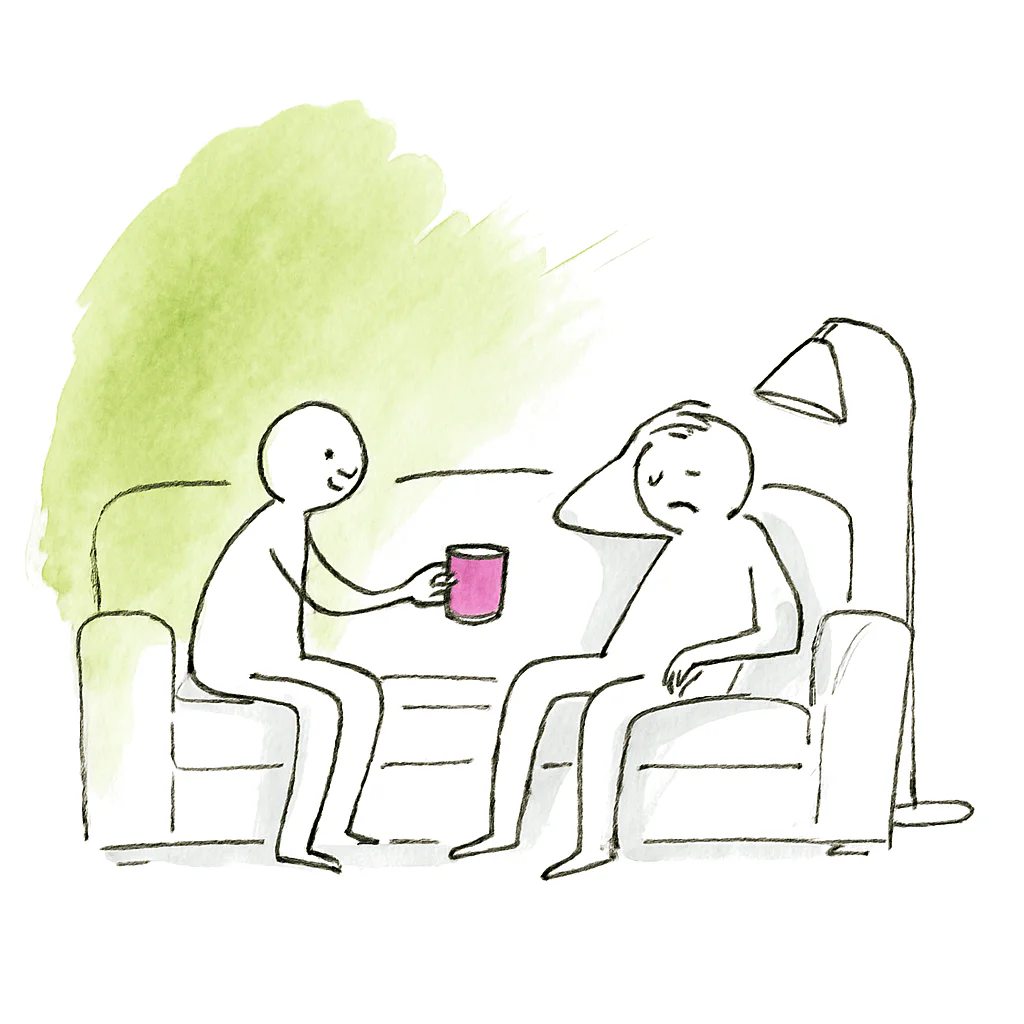
Where you'll hear it
Raphaël
T'as l'air vraiment fatigué aujourd'hui. Je suis inquiet pour toi, tu sais ?
You look really tired today. I'm worried about you, you know?
Juliette
Je suis en PLS total. Le boulot me stresse énormément ces derniers temps, et j'ai du mal à dormir la nuit. Je pensais que ça allait s'améliorer, mais c'est de pire en pire.
I'm totally wiped out. Work has been stressing me out lately, and I'm having trouble sleeping at night. I thought it would get better, but it's getting worse and worse.
Raphaël
Ça va? Comment tu gères tout ça ? Tu devrais peut-être prendre du recul et te reposer un peu.
How are you? How are you handling all this? Maybe you should step back and rest a bit.
Juliette
On fait aller... mais franchement, je crois que j'ai besoin de me mettre au vert pendant quelques jours.
Managing somehow... but honestly, I think I need to get away for a few days.
Listen: ça va
How it shows up
Salut ! Ça va ? Ça va, et toi ?
Hi! How are you? Fine, and you?
Ça va pas du tout, j'ai trop de boulot.
Not good at all, I've got way too much work.
Tu veux de l'aide ? Non merci, ça va.
Do you want some help? No thanks, I'm okay.
Questions people ask
How do you reply to ça va?
Ça va, et toi ? is the standard answer. Ça va bien if you're happy, bof or ça va pas if you're not. Only close friends expect the full story.
What is the response to ça va?
Pick the one that's true. Ça va très bien: great. Ça va bien or ça va: fine. Pas mal: not bad. On fait aller: getting by. Bof: meh. Ça va pas: not good. Then send it back with et toi ? so the other person gets their turn.
How do you answer comment ça va?
The same way: ça va bien, merci, et toi ? Comment ça va is just a slightly fuller version of ça va. If someone says comment allez-vous, answer très bien, merci, et vous ? and keep the vous.
Is ça va polite?
With friends and colleagues, yes. With a stranger or someone senior, say comment allez-vous ? instead.