
voilà
Voilà means 'there you go', 'here it is' or 'exactly', and the French use it constantly. Hand someone a drink: voilà. Finish explaining something: voilà. Agree with a point: voilà, that's it. It's a tiny word that wraps things up, which is why it lands at the end of so many French sentences.
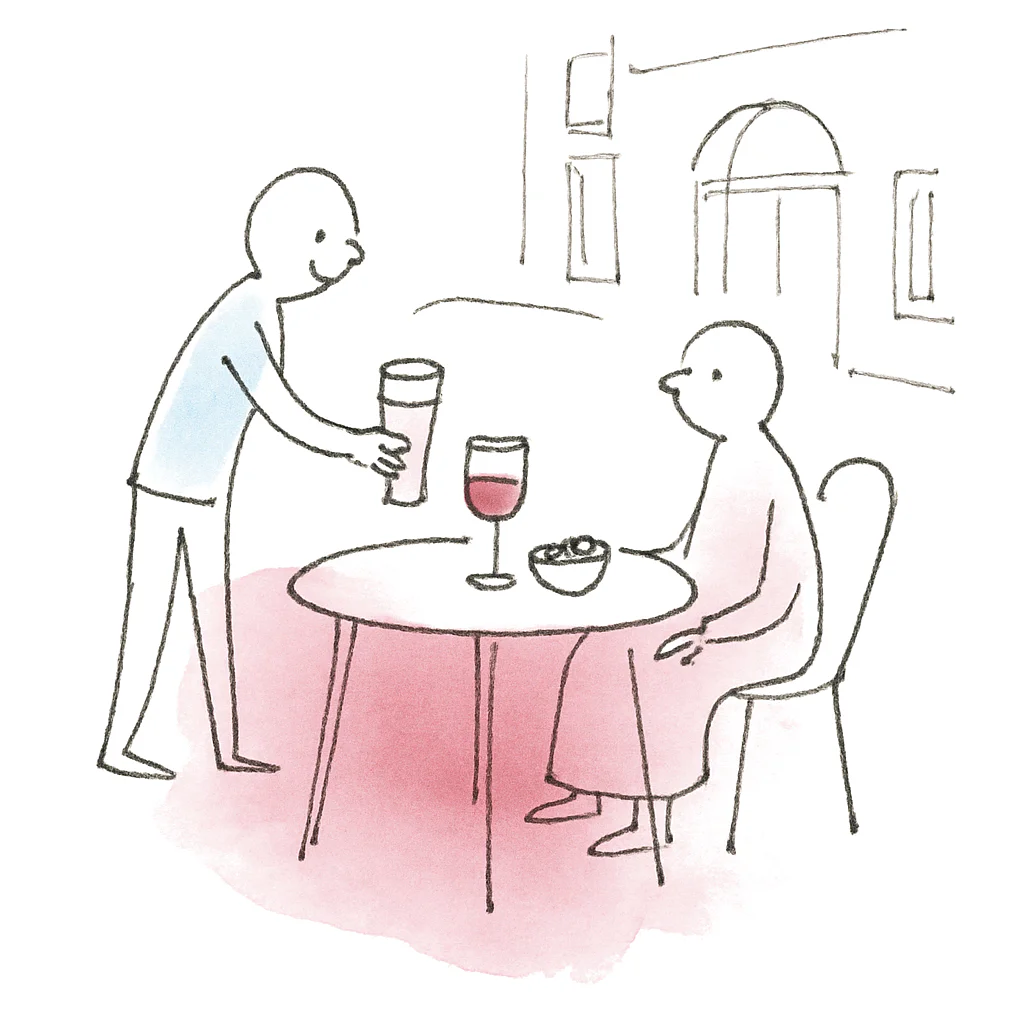
Where you'll hear it
Tom
Ah, n'oublie pas les cacahouètes ! J'ai une petite faim.
Ah, don't forget the peanuts! I'm kind of hungry.
Mathis
Très bien, je reviens de suite. [Quelques minutes plus tard]
OK, I'll be right back. [A few minutes later]
Mathis
Voilà, une bière pour moi, un vin pour toi, et des cacahouètes. On trinque ?
There you go, a beer for me, a wine for you, and some peanuts. Shall we toast?
Tom
Tchin tchin ! À une soirée réussie.
Cheers! To a successful evening.
Listen: voilà
How it shows up
Voilà votre monnaie, bonne journée !
Here's your change, have a nice day!
Tu tournes à droite, puis à gauche, et voilà.
You turn right, then left, and there you are.
Donc le problème, c'est le prix ? Voilà.
So the problem is the price? Exactly.
Questions people ask
What's the difference between voilà and voici?
Voici points to something close or coming next, voilà to something over there or just done. In everyday speech voilà wins almost every time; voici sounds a bit written.
Is it voilà or voila?
Voilà, with the grave accent on the a. English often drops it, but in French the accent is part of the word.