
Pimsleur French Review 2026
Reviewed against editorial standards
Bonjour, Amélie here. 👋
Pimsleur is the odd one out among French courses, and I mean that kindly. While other apps put words on a screen, Pimsleur puts a voice in your ear and makes you answer out loud. For a teacher who cares about listening, that is a very interesting starting point. This Pimsleur French review looks at what the method does well, what it costs in 2026, and whether it prepares you for French as French people actually speak it.
The short answer: Pimsleur is worth it for beginners who learn best by ear, want to speak early and can study during a commute or a walk. Its audio-first, answer-out-loud method builds pronunciation and speaking reflexes better than most apps. It is expensive, the French is careful studio French, and its five levels take you to an intermediate level at most. Pair it with real conversational listening once you are past the basics.
Prices, levels and lesson facts checked 6 October 2026 on pimsleur.com (the Learn French page and the Pimsleur FAQ). The site displayed US dollar prices with a euro estimate. A “Fall Savings Sale” was running, so sale prices are shown next to the regular ones.
What Pimsleur French includes in 2026
From Pimsleur’s French page and FAQ:
- Five levels, 150 lessons. The French Premium Complete Course covers Levels 1-5, 30 lessons per level.
- About 30 minutes a day. The course is built around daily 30-minute audio lessons, plus reading lessons and cultural notes. Each level is described as about 16 hours.
- A clear progression. Level 1 covers simple conversations and the basics of reading with correct pronunciation. Level 5 is described as progressing “to an intermediate level”, with a short story for reading practice.
- Three formats. The FAQ describes Audio-Only and Premium subscriptions for a single language, and All Access, which includes all 51 Pimsleur languages.
- A free lesson to try before buying.
Pimsleur prices
Here is what the French page showed on 6 October 2026, during a sale:
| Product | Regular price | Sale price shown |
|---|---|---|
| French Premium Complete Course (Levels 1-5) | $575 | $431.25 |
| One level of French Premium (30 lessons) | $150 | $112.50 |
| Pimsleur All Access Lifetime (51 languages) | $798 | $478.80 |
These are one-off purchases. Pimsleur also sells subscriptions (Audio-Only, Premium and All Access, according to its FAQ), but the subscription price was not displayed on the French page when I checked, so look at your own checkout before deciding. Either way, Pimsleur is one of the more expensive ways to learn French. You are paying for a carefully engineered course, not a content library.
What Pimsleur does well
It trains your ear first. This is the big one. Most apps teach you to recognise written French and then attach a sound to it. Pimsleur does it the other way round. You hear French, you understand it, you answer. That is closer to how listening works in real life.
It makes you speak, out loud, constantly. The method prompts you to answer before you hear the correct version. That pause, where your brain scrambles to build a sentence, is where speaking skills grow.
Pronunciation gets serious attention. Because everything is spoken, you hear and copy French sounds from the first minute, before spelling has a chance to mislead you. That is exactly the right order for building pronunciation habits.
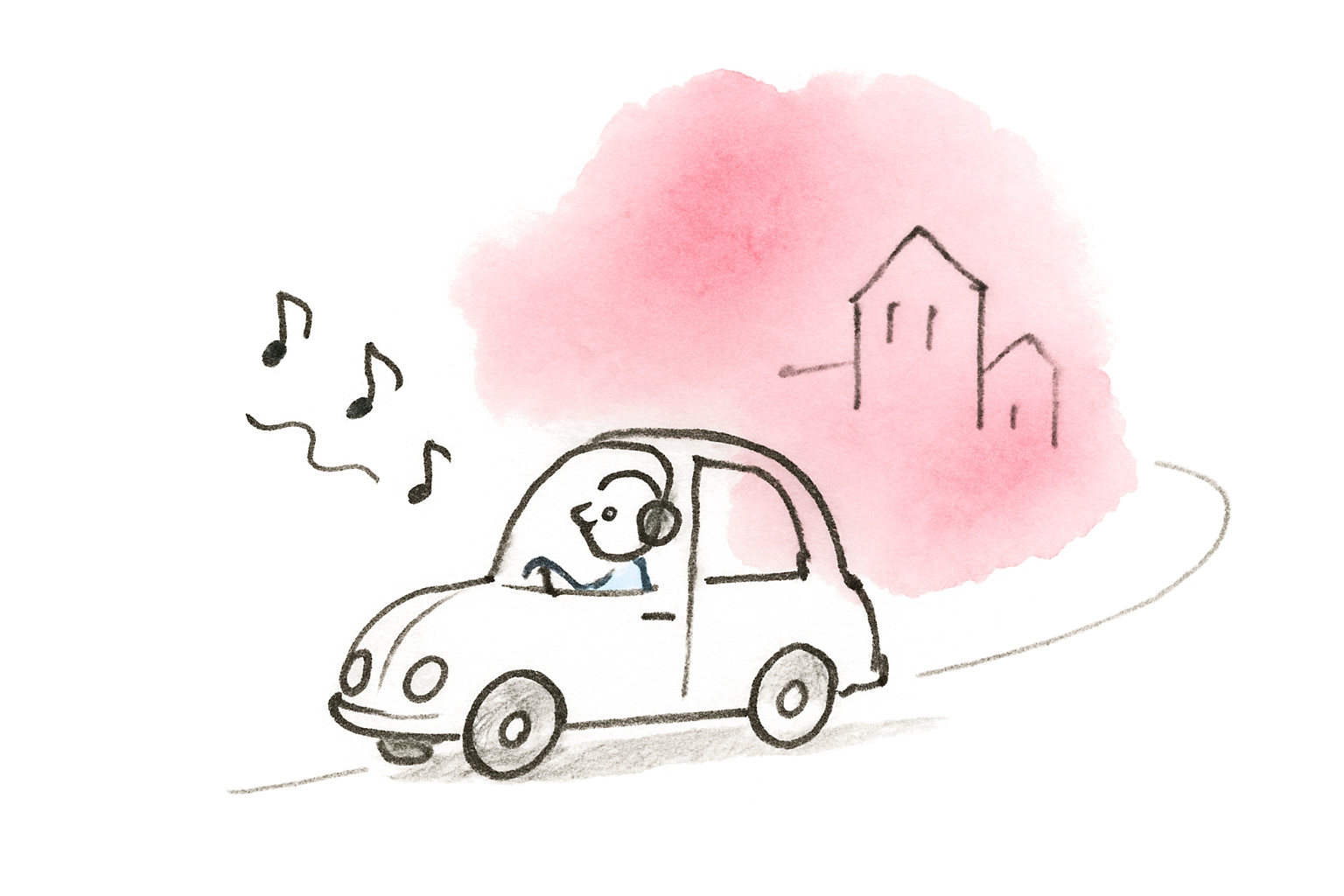
It fits into dead time. Thirty minutes of audio fits a commute, a walk, the washing up. A course you actually do beats a better course you never open.
It is a real course. 150 lessons with a clear sequence. You never wonder what to do next.
Where Pimsleur falls short for real spoken French
Studio French is not street French. Pimsleur’s recordings are clear, careful and paced for learners. That is the right choice for a course. It also means you rarely hear the French that confuses learners later: chais pas, t’as, y a, ben, sentences that stop halfway, two people talking over each other. You will need to train that separately, and I explain what to listen for in textbook French vs real French.
It stops at intermediate. Pimsleur itself describes Level 5 as progressing to an intermediate level. That is a good place to arrive, but it is the start of the hardest part of listening, not the end.
It is slow on vocabulary. The method recycles a limited set of words thoroughly. That is great for retention and less great for breadth. Real conversations use a lot of words.
It is expensive. At regular prices, the complete French course costs more than a year of most apps or podcasts, and more than many hours with a tutor.
Little grammar explanation. Pimsleur is designed so you absorb patterns rather than study rules. Some learners love this. Others feel lost without an explanation of why.
Is Pimsleur worth it?
| Learner | Is Pimsleur worth it? | Why |
|---|---|---|
| A1 beginner who learns by ear | Yes | Audio-first method, early speaking, good pronunciation habits |
| Commuter with 30 minutes a day | Yes | Built for exactly that slot |
| Learner on a tight budget | Probably not | Expensive compared with apps, podcasts and tutors |
| B1 learner stuck on listening | No | The course tops out around intermediate, with careful audio |
| Grammar-first learner | Probably not | Patterns over rules; try Babbel instead |
If you buy, buy Level 1 first rather than the full course. You will know within a few lessons whether the method suits you.
How to get more out of Pimsleur
- Never skip the pause. Answer out loud before you hear the answer, every time. The struggle is the lesson.
- Repeat lessons you got wrong. The method expects it.
- Add real listening from Level 3. Once you have the basics, put in ten minutes a day of natural French, such as one of the best French podcasts by level.
- Use the transcript habit elsewhere. Pimsleur trains ear-first; real podcasts with transcripts let you check what you missed. See French podcasts with transcripts.
What we do differently
Pimsleur and French with Amélie agree on one thing: listening comes first. Where we differ is the French itself. We send a new dialogue every week, written the way French people actually talk to each other, with native audio, 🐢 Slow Audio and notes on what textbooks leave out. It is for B1+ learners, so it is the next step after Pimsleur’s five levels, not a replacement for them. 🧭 The Placement Test at frenchwithamelie.com/test tells you if you are ready.
Alternatives
If Pimsleur is too expensive or too narrow, compare the rest of this series. The Duolingo French review covers the free option, the Babbel French review the best grammar explanations, and Babbel vs Duolingo for French the two side by side. The Busuu French review adds human corrections, the Rosetta Stone French review is the other immersion classic, and italki for French gets you a real conversation partner. The overview is 7 best Duolingo alternatives for French. For audio beyond a course, try the InnerFrench review or our French listening practice routine.
FAQ
Is Pimsleur good for learning French?
Yes, for beginners who learn by ear. Its audio-first method, where you answer out loud before hearing the correct version, builds speaking reflexes and good pronunciation. It is weaker on vocabulary breadth, grammar explanation and informal spoken French.
How much does Pimsleur French cost?
On 6 October 2026, pimsleur.com listed the French Premium Complete Course (Levels 1-5) at $575, on sale for $431.25, and single levels at $150, on sale for $112.50. Pimsleur also sells subscriptions; check your checkout for the current price in your country.
How many levels does Pimsleur French have?
Five levels of 30 lessons each, 150 lessons in total. Each level is described as about 16 hours, built around daily 30-minute audio lessons plus reading lessons.
Can Pimsleur make you fluent in French?
No single course can. Pimsleur says Level 5 takes you to an intermediate level. From there, fluency needs a lot of real listening and real conversation.
Is Pimsleur better than Duolingo for French?
For speaking and pronunciation, usually yes, because you speak out loud in every lesson. For price, vocabulary breadth and habit-building, Duolingo is hard to beat. A sensible split is Duolingo for vocabulary and Pimsleur for speaking.
Does Pimsleur prepare you for French conversations?
It prepares you for simple, polite conversations at a learner-friendly pace. Real conversations between French people are faster and more informal, so add natural listening, such as podcasts and dialogues, once you are past Level 2 or 3.
Final verdict
Pimsleur is the best pure audio course for French beginners, and the only big name that truly starts with your ear. It is pricey, careful and finite. Use it to build a confident, well-pronounced foundation, then go and listen to French that has not been tidied up for you.

About Amélie Laurent
What is French with Amélie?
Finally understand real spoken French, with a teacher in it with you.
- 💬 2 Full Lessons a week, with Amélie's annotated vocab notes
- Every dialogue at native speed, 🐢 Slow Audio and ⚡ À la parisienne
- 💜 The Private Podcast: 220 episodes with Live Transcript, in your podcast app
- 📚 The 220-Lesson Library, with member-only series like Hot Issues 🔥 and Vivre en France 🥖
- ✅ Monthly Level Tests that track your climb
- A real teacher: Amélie writes every dialogue herself
Expressions mentioned in this guide
In this cluster
- Start here: Best App to Learn French in 2026: A Teacher's Honest Pick
- Duolingo French Review 2026: Is It Worth It?
- Babbel French Review 2026
- Babbel vs Duolingo for French (2026)
- 7 Best Duolingo Alternatives for French (2026)
- Busuu French Review 2026
- Rosetta Stone French Review 2026
- italki for French Review 2026